
I. Basic Definitions and Principles
1. What is a UV LED curing lamp?
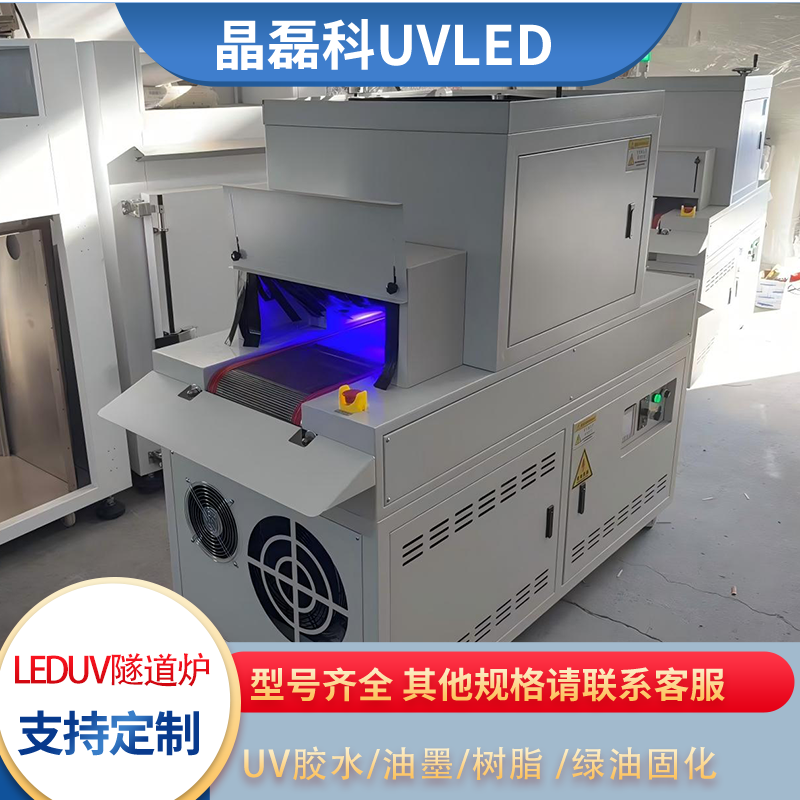
A UV LED curing lamp is a device that uses ultraviolet light-emitting diodes (UV-LEDs) as the light source. It emits specific
wavelengths ofultraviolet light (usually 365nm, 385nm, 395nm, 405nm, etc.) to trigger chemical reactions in photosensitive
materials (such as ink, glue, coatings),achieving rapid curing. The core principle is that photoinitiators absorb ultraviolet energy
to produce free radicals or ions,initiating polymerizationor cross-linking reactions, causing the material to transition from liquid to solid.
2. Difference from traditional mercury lamps
Environmental friendliness: No need for mercury elements, no ozone emissions, in line with international environmental conventions
(such as the MinamataConventin).
Energy efficiency: Energy consumption reduced by 60%-80%, lifespan up to 10,000-30,000 hours (traditional mercury lamps only last
1,000-2,000 hours).
Control precision: Can precisely adjust wavelength and light intensity to avoid material overheating.
II. Core Advantages
1. Efficient energy saving:
Light conversion efficiency exceeds 40%, curing speed is 60% faster than mercury lamps, and supports instant start/stop (no need for preheating).
2. Environmental safety:
No mercury pollution or ozone production, suitable for sensitive fields such as food and medicine.
3. Precise adaptation:
Wavelength options (e.g., 365nm for electronic packaging, 395nm suitable for ink curing), light intensity controllable (0-5000mW/cm²).
4. Low maintenance cost:
Long lifespan, no need for frequent lamp tube replacement.
III. Main Application Fields
Industry Typical Application Scenarios Representative Cases
Printing and Packaging UV ink curing (cartons, labels), anti-counterfeiting printing Food packaging boxes, drug labels
Electronic Manufacturing Circuit board packaging (PCB), chip bonding, display screen photoresist curing Smartphone camera modules, flexible circuits
Healthcare Dental resin curing, medical catheter coating, surgical instrument disinfection Light-cured dental filling materials
Automotive Industry Vehicle lamp bonding, interior parts coating, wheel hub UV protective film Automotive LED headlight sealing
3D Printing Photoresin layer-by-layer curing High-precision industrial models
IV. Technical Parameter Analysis
1. Wavelength selection:
365nm: Strong penetration, suitable for deep curing (such as electronic packaging, optical coatings).
395nm: High surface curing efficiency, suitable for ink and glue.
2. Light intensity and dose:
Light intensity (mW/cm²) determines curing speed, light dose (J/cm²) = Light intensity × Time, needs to match material characteristics.
V. Market Trends and Challenges
Market size: The global UV LED curing lamp market is expected to exceed $4 billion by 2025, with China accounting for over 30%.
Technical bottlenecks: Long wavelengths (such as UVC) uniformity, heat dissipation design still need breakthroughs.
Emerging fields: Semiconductor lithography, aerospace coatings, eco-friendly building materials.
VI. Common Questions (Q&A)
Q1: Are UV LED curing lamps suitable for all UV materials?
A: Need to select matching wavelengths based on the material's photoinitiator absorption band (e.g., 395nm suitable for most inks,
365nm suitable for special glues).
Q2: How can we extend the equipment lifespan?
A: Regularly clean the heat dissipation system, avoid long-term overload operation, choose a constant current power supply.